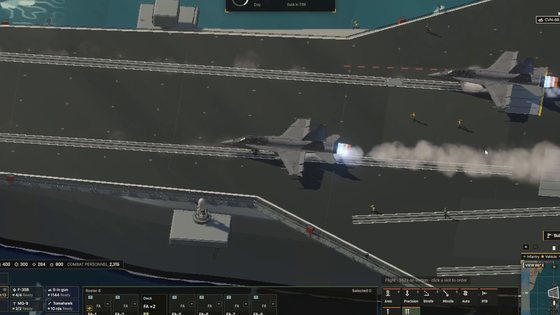
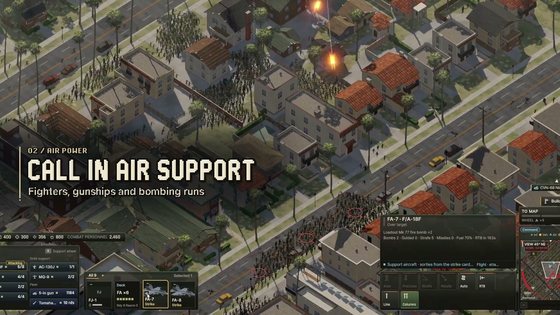
Ebbtide gameplay overview
Ebbtide is a single-player survival RTS: you run a paused or 4x-speed operations map over Los Angeles, zoom into any street to fight the battle yourself, and every kill, loss and collapsed building carries back to the map.
Ebbtide is a single-player survival RTS where the operations map and the battlefield are the same place. You read a city-wide map of Los Angeles, pick a problem, scroll your wheel into that street until it becomes a 3D pixel-art battlefield, and fight — or don't, and let it resolve without you, badly. Nothing is scripted as a mission and nothing is auto-resolved on your behalf.
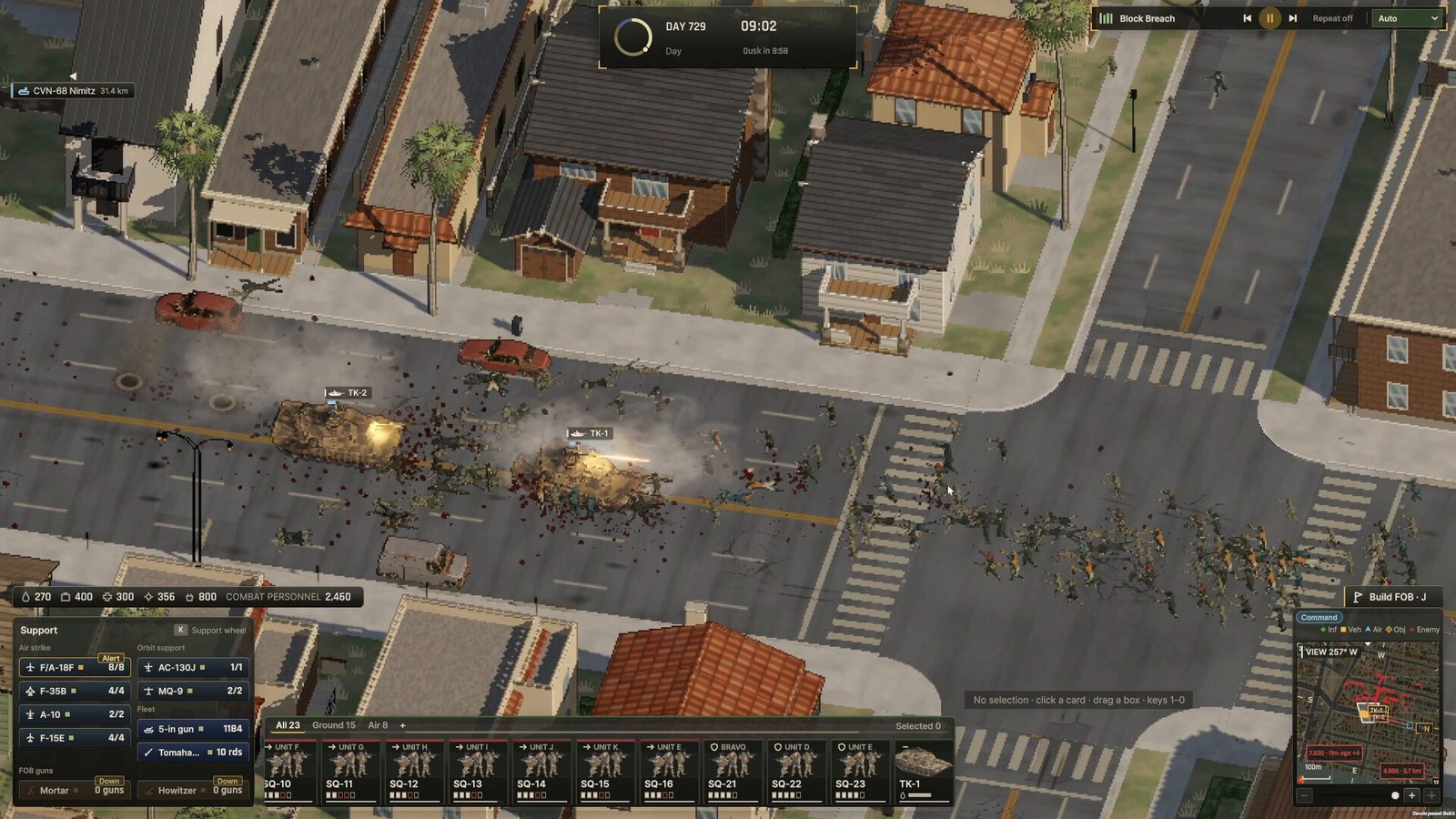
Two layers, one war
The map is not a menu that launches battles. It is the war, viewed from high enough that individual soldiers are dots. Scroll in on any street and the same fight renders in 3D with no loading screen; scroll back out and it keeps running while you look at something else. That single design decision produces most of Ebbtide's tension:
- Every result is real. A soldier lost on a street is off your roster on the map. A building collapsed by a Tomahawk is gone from the map's cover. Zombies killed are subtracted from the horde numbers you can read in the HUD.
- There is no "resolve battle" button. Leaving a fight to check another district is a decision with a cost, not a time-saver.
- The clock is yours to slow. Pause and look, or run the map at up to 4× when you are waiting on a convoy.
The map rules: pause, 4x, and three district states
Los Angeles is divided into 15 districts, and each one sits in one of three states at any moment.
| State | What it means | What you can still do |
|---|---|---|
| Hold | Your forces control the district | Build, supply, stage from it, pull civilians out through it |
| Crisis | Contested, actively degrading | Reinforce, delay, evacuate, or write it off and save the units |
| Lost | Overrun | Nothing inside is coming back; treat the border as a wall |
The states slide in one direction unless you spend force to stop them. That is the whole campaign argument in miniature: you have a fixed pool of infantry, vehicles, ammunition and time, and 15 districts competing for it. You cannot save all of them, and the game is built so you have to say out loud which ones you are abandoning.
District geography matters because of what sits in each one. The Port of LA is where the evacuation maths ends — the people, troops, equipment and supplies that reach it become your starting force for the world campaign later. Losing ground in the south of the map is not the same loss as losing ground around the port.
Fog of war works on the horde, not on you
Most RTS games hide the enemy from you. Ebbtide's twist is that the map only shows hordes inside your forces' line of sight. A district with no friendly eyes on it is a district where a horde can be gathering and you will not see it until something you own is in contact with it.
In practice this changes how you spend reconnaissance:
- Units holding a quiet district are doing work even when nothing attacks them: they are your sensor net.
- Pulling a unit back to reinforce a hot district opens a blind spot somewhere else, and the horde is capable of noticing.
- The Nexus — the hive mind running the zombies — is described as ambushing convoys, cutting roads, besieging bases and hunting stranded units. Those are all actions that happen in the places you stopped looking at.
What the horde does that most zombie RTS hordes don't
Three behaviours separate the pressure here from a reskinned tower defence:
- They stack. Zombies pile up on each other to climb walls and rooftops. A wall you built yesterday can become a staircase today, which is why the base layer has scaffolding and rooftop deployment in it.
- They grab aircraft. Helicopters hovering close to the ground get clung to. Fast-roping troops from a Black Hawk is a real insertion, and it is also a real way to lose a Black Hawk.
- Your dead join them. Soldiers killed by the horde rise again as zombies. A bad fight does not just cost you a squad, it feeds the thing that killed the squad.
Direct control: what TAB actually changes
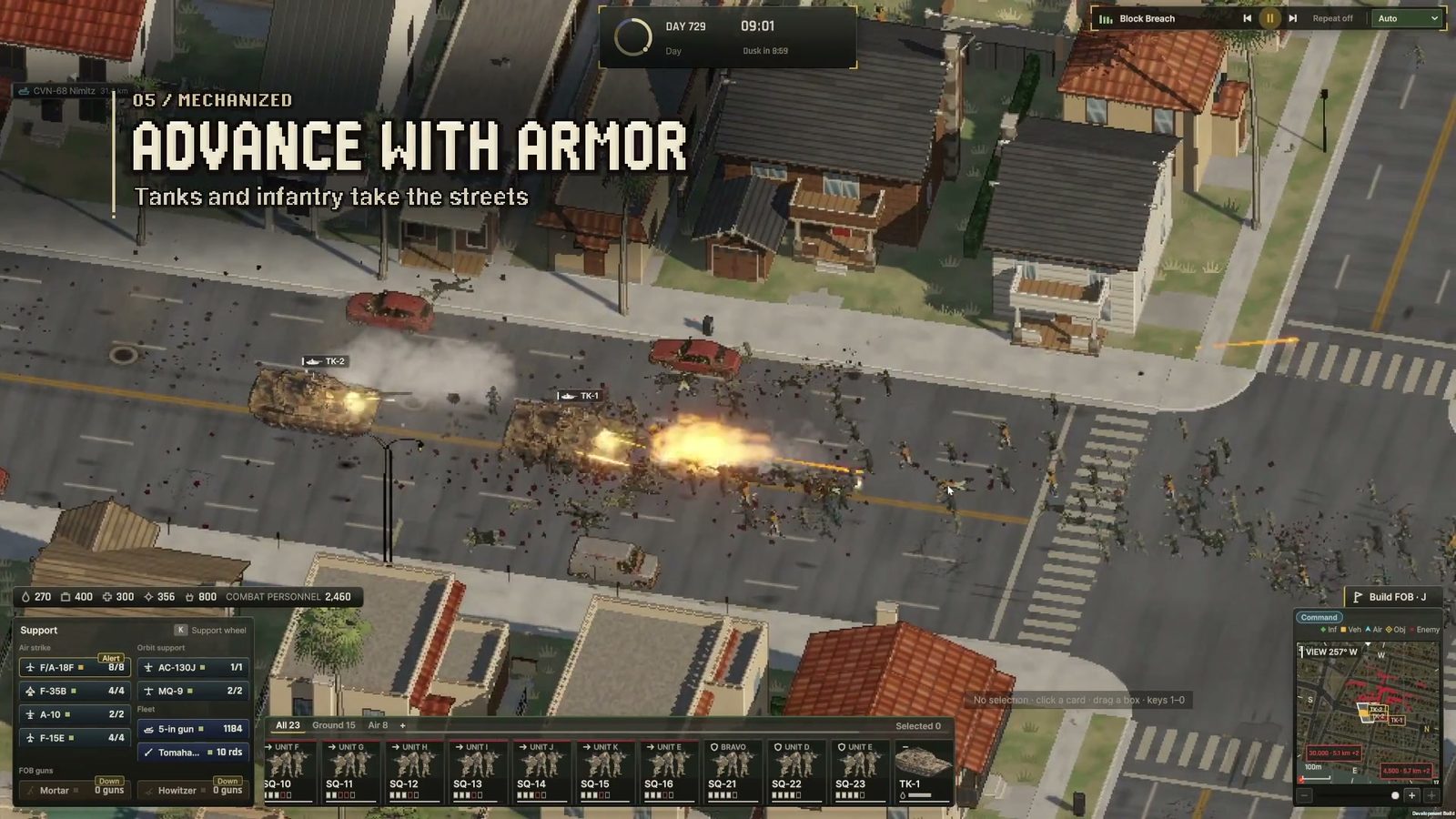
You can command the whole thing as a pure RTS: set squad formations and combat stances, order tanks, Bradleys, LAVs and Humvees around, task Apache and Viper attack helicopters, fast-rope troops or land helicopters on rooftops to deploy squads.
Press TAB and you take direct control of a single soldier, tank or helicopter. This is not a gimmick mode bolted on the side — it is how you convert a losing street fight into a survivable one, because a tank under direct control aims at what you aim at instead of at what its AI picked.
Two habits that pay off immediately:
- Take control when something is about to die. The unit you save is the one that was one hit from gone; you usually have two or three seconds of warning.
- Do not take control when you need to watch the map. Direct control costs you the overhead picture, and the Nexus is happiest when you are not looking at the other fourteen districts.
Where a session actually goes
A typical loop, in order:
- Read the map. Check which districts moved to Crisis overnight, and which dropped out of sight.
- Pick the problem you can afford. One reinforcing column, one convoy, or one fire mission — rarely all three.
- Move or fight. Send units by road, insert by helicopter, or zoom in and take a street personally.
- Keep the supply chain honest. Units and aircraft can only rearm and refuel at bases you hold, so a push without a base behind it is a countdown.
- Live with the result. Lost district, lost squad, one building fewer to hide behind.
That is the game: not winning a battle, but deciding which losses are acceptable this hour. The Los Angeles map page goes district by district; the units page covers who you send; fire support covers what you spend when sending people is too expensive.