Ebbtide base building and supply
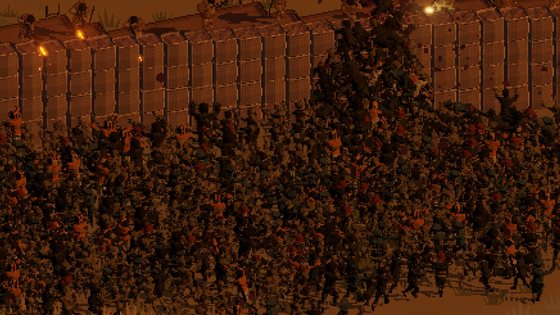
A FOB in Ebbtide is HESCO and concrete walls, gates and scaffolding, gun nests, CIWS, mortar pits, an ammo depot, a fuel point and lighting. Everything you build has to be hauled in by hooklift truck or helicopter sling, and the horde hunts those convoys.
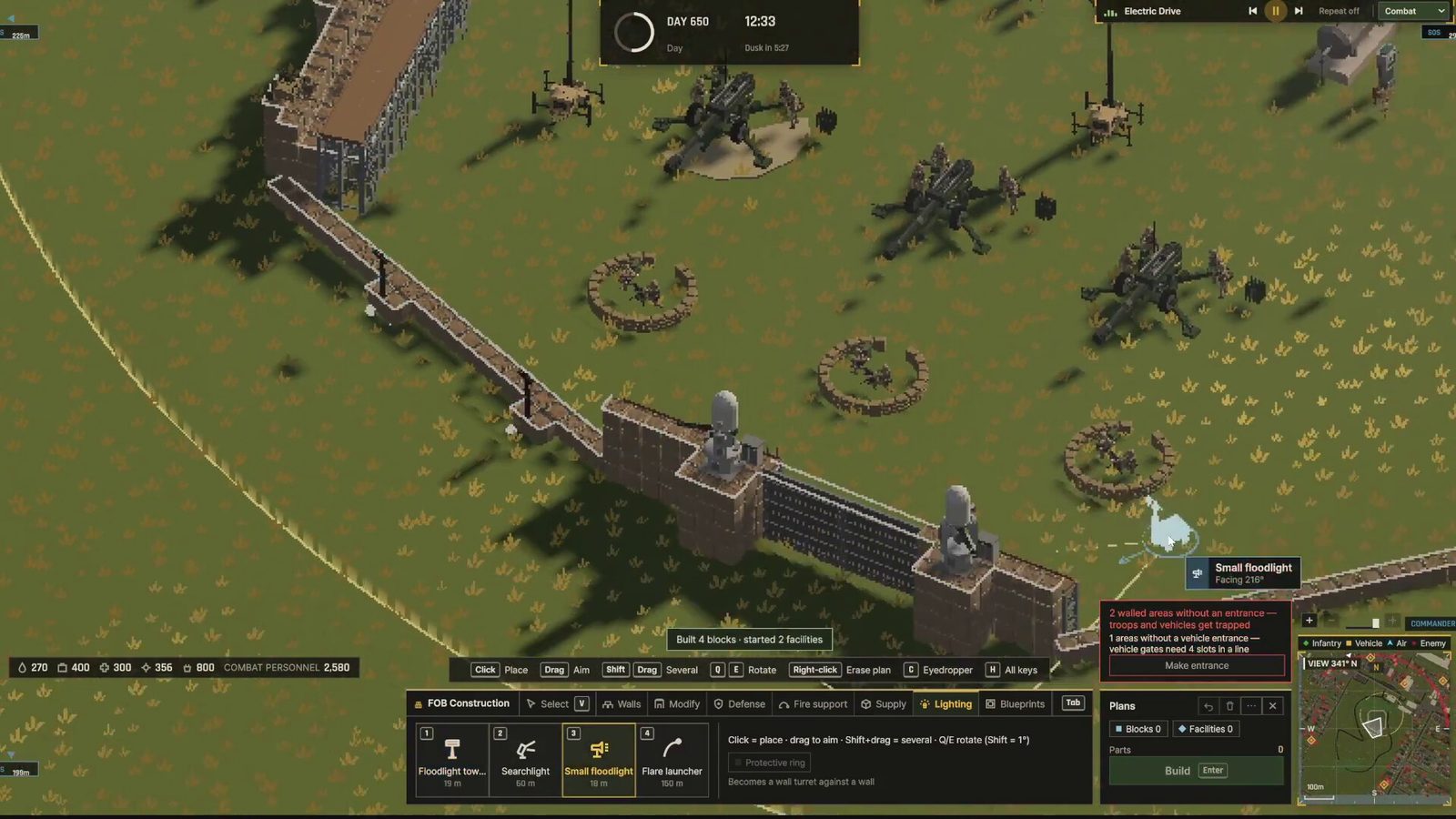
A forward operating base in Ebbtide is not a spawn point — it is the thing that lets your vehicles and aircraft keep working. You choose the ground, raise HESCO and concrete walls, add gates and scaffolding to defend the walls, then place gun nests, CIWS, mortar pits, an ammunition depot, a fuel point and lighting. Every one of those parts has to be hauled in by hooklift truck or helicopter sling, and the horde specifically hunts the trucks that do it.
What goes into a base, and what each piece buys you
| Module | What it does | Why you place it there |
|---|---|---|
| HESCO walls | The perimeter | Fast to raise, cheap to replace, and the thing the horde stacks against |
| Concrete walls | The hard perimeter | Slower and heavier, for the side facing the main approach |
| Gates | Access for troops and vehicles | The single most common way to break your own base |
| Scaffolding | Fighting positions on the wall | Lets infantry defend the wall instead of the ground behind it |
| Gun nests | Static infantry positions | Covering the approach, not the wall itself |
| CIWS | Close-in weapon system | Point defence; the anti-air piece that also shreds anything that gets close |
| Mortar pits | Indirect fire from inside the wire | Answers a mass forming just outside your line of sight |
| Ammo depot | Rearm point | Without it, every unit has to drive back to wherever it came from |
| Fuel point | Refuel point | The reason armour can operate at your base at all |
| Lighting | Visibility at night | Cheap, and it changes what your sentries can see |
The two that decide whether the base functions are the ammo depot and the fuel point. Soldiers, vehicles and aircraft burn ammunition and fuel, and they can only rearm and refuel at bases you hold. A base without them is a wall with people standing behind it.
The gate mistake the game will call out
The FOB builder actively warns you about the two ways players trap their own garrison:
- A walled area with no entrance. Troops and vehicles inside cannot get out, and the game tells you so.
- A vehicle entrance that is too narrow. Gates for vehicles need enough width in a line for the vehicle to pass — the builder flags an area as having no usable vehicle entrance when the gap is too tight.
Both warnings exist because both mistakes happen constantly: you build a perfect perimeter, then discover your armour is locked inside it, or worse, locked outside while the horde arrives. Build the gate first and the wall around it, not the other way round.
Supply is a road, not a number
- Every wall has a delivery. The concrete in your perimeter was carried there by something the horde can kill.
- Every refill is a trip. A base deep in a district you barely hold needs a convoy route you can actually keep open.
- Roads are the supply system. The Nexus's stated behaviours — ambushing convoys, cutting roads, besieging bases — are all attacks on the logistics layer, not on your infantry.
The consequence for base placement is simple: build near a route you can defend, not at the spot with the best cover. A perfect position on a cut road is a tomb.
CIWS is not only an anti-air weapon
Close-in weapon systems are listed among the base's emplacements rather than as a fire-support call-in. They are point defence, so placement matters more than count — but against a horde that climbs walls and grabs low-hovering helicopters, a rapid-fire mount is a wall gun with a much better rate of fire. Pair it with lighting and the perimeter is genuinely dangerous at night.
Where to dig in
Four placement questions, in order:
- Does it cover a road I need? If the answer is no, the base is a hobby.
- Can a convoy reach it without crossing ground I do not hold? If not, plan the escort before the walls.
- Is there a second approach? The horde stacks and climbs; a base with one wall and three open sides is three problems.
- What happens when I abandon it? A FOB in a district about to fall is a gift of materials and structures. Sometimes the right answer is to strip it and pull back rather than defend it.
Convoy security: the part that loses campaigns
Convoys are the most attacked thing you own. A workable escort pattern:
- Never send a solo truck. Two vehicles minimum, one of them armed.
- Escort with something that can fight while moving — a LAV or Humvee, not a tank that has to stop.
- Route through held districts even when it is longer. A short cut through fog of war is how a convoy disappears.
- Escort the return trip too. An empty truck is worth the same to the horde as a loaded one.
If a route gets cut repeatedly, that is the game telling you the base is in the wrong place, or that you need a second one closer to the fight.
A build order for the first FOB
- Pick the ground — a road junction inside a district you hold, with a second approach you can watch.
- Gate first. Wide enough for vehicles, on the side facing your supply route.
- HESCO perimeter around the gate, concrete on the exposed face.
- Ammo depot and fuel point before anything else that shoots. Everything else stops working without them.
- Gun nests and scaffolding on the wall, covering the approach rather than the wall line.
- CIWS and lighting once the base is functional.
- Mortar pits last — indirect fire is a luxury until the base can defend itself.
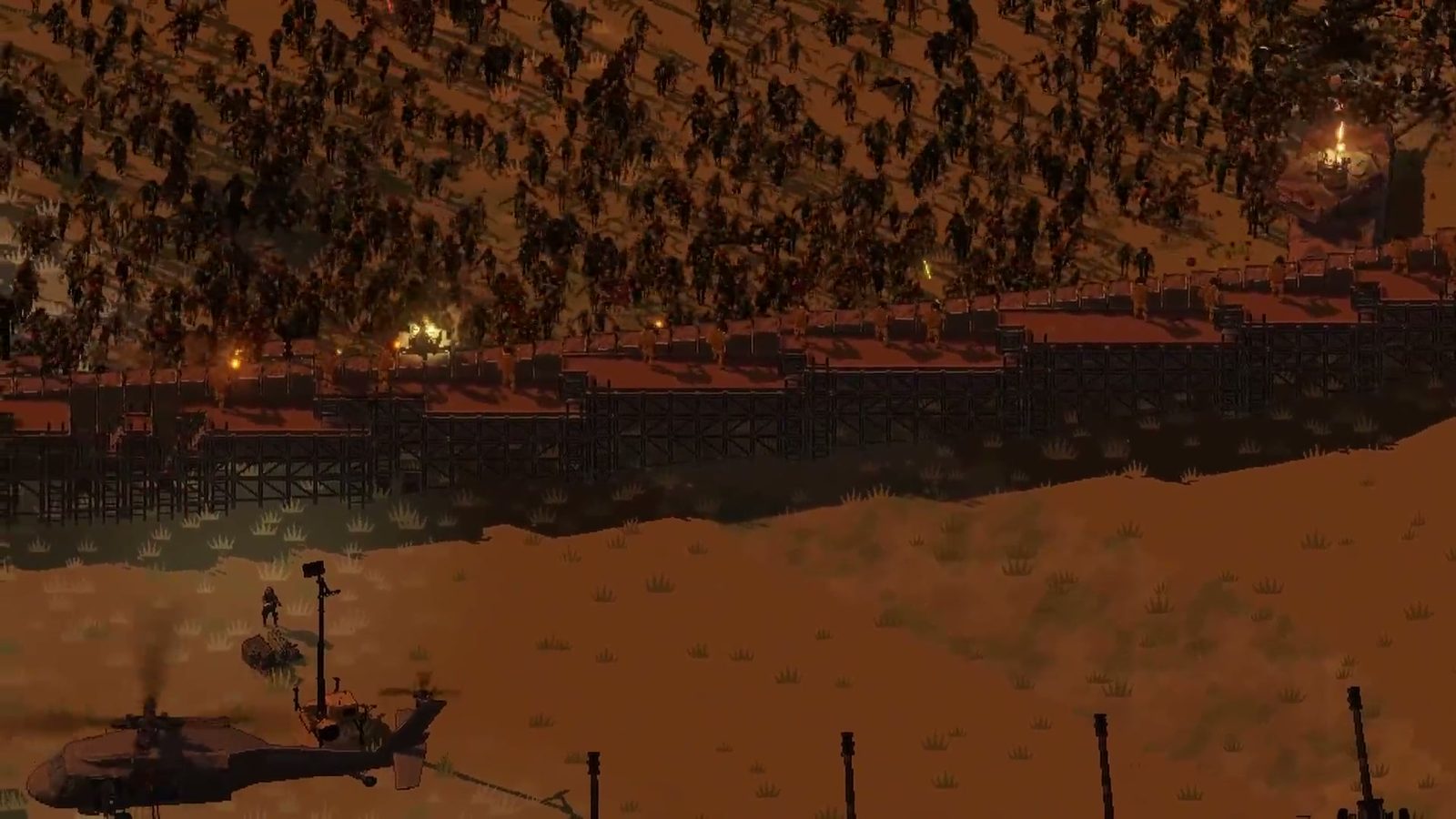
Fire support and base defence overlap heavily: a mortar pit and a howitzer battery answer the same problem from different budgets. The fire support page explains when the ship is the cheaper answer.