
Field briefing // TF-1 "Ark"
EbbtideOperations Guide
A single-player survival RTS from ProjectAlive. One operations map, one carrier task force, and a city you are not going to save.
Start with these6
 Release
Ebbtide release date, platforms and wishlist status
Coming soon, no date and no price yet — plus the 15,000 wishlist milestone and what the dev has actually promised.
Read ▸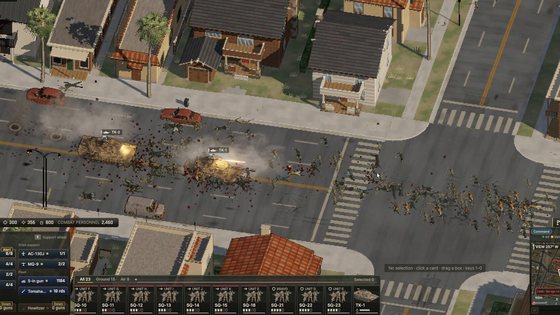 Systems
Ebbtide gameplay overview
One map, no separate missions, no auto-resolve — what the loop actually asks you to do minute to minute.
Read ▸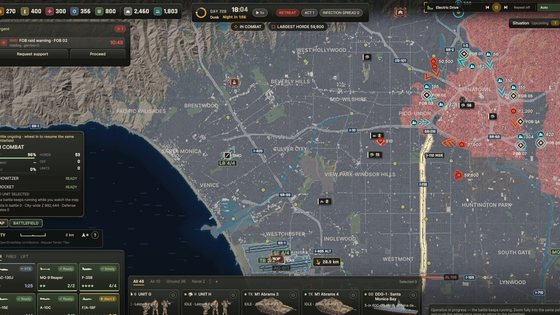 Map
Ebbtide Los Angeles map and districts
15 districts, three states, one evacuation order you have to pick — plus how the fog of war changes what you can even see.
Read ▸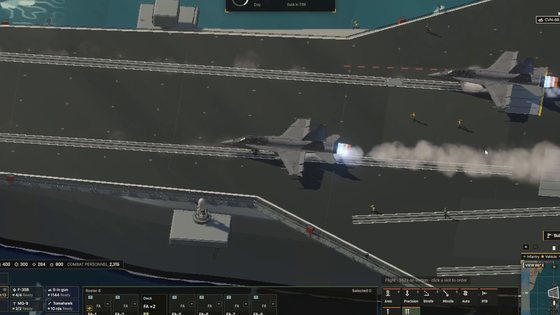 Units
Ebbtide units and vehicles
Who you can order, what each arm is for, and the one thing nobody tells you about taking direct control.
Read ▸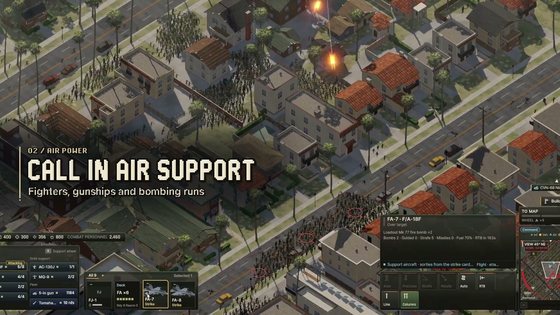 Fire support
Ebbtide fire support
Nine call-in systems, one shared magazine, and the reason heavy ordnance is a demolition tool as much as a weapon.
Read ▸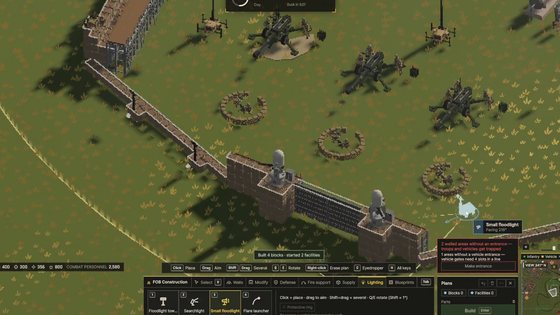 Base
Ebbtide base building and supply
Walls are the easy part. Gates, ammo, fuel and the truck route are what decide whether the base holds.
Read ▸Ebbtide is a real-time survival strategy game from ProjectAlive about holding a city you are going to lose. You command TF-1 "Ark", a carrier task force offshore, and a mixed force of National Guard, police and Marines inside a Los Angeles split into 15 districts. The pitch is not the zombies — it is the zoom: an operations map where every street is also a live 3D battlefield, and nothing resolves without you.
What you are actually doing in Ebbtide
You are running a queue of impossible choices with a fixed pool of troops.
The map is where the game is decided. Fifteen districts sit in one of three states — Hold, Crisis or Lost — and they slide in one direction unless you spend force to stop them. Reinforcing one district means leaving another with a thinner garrison and a wider blind spot, because zombies only appear on the map inside your forces' line of sight. Districts that go quiet are not quiet; they are simply unwatched.
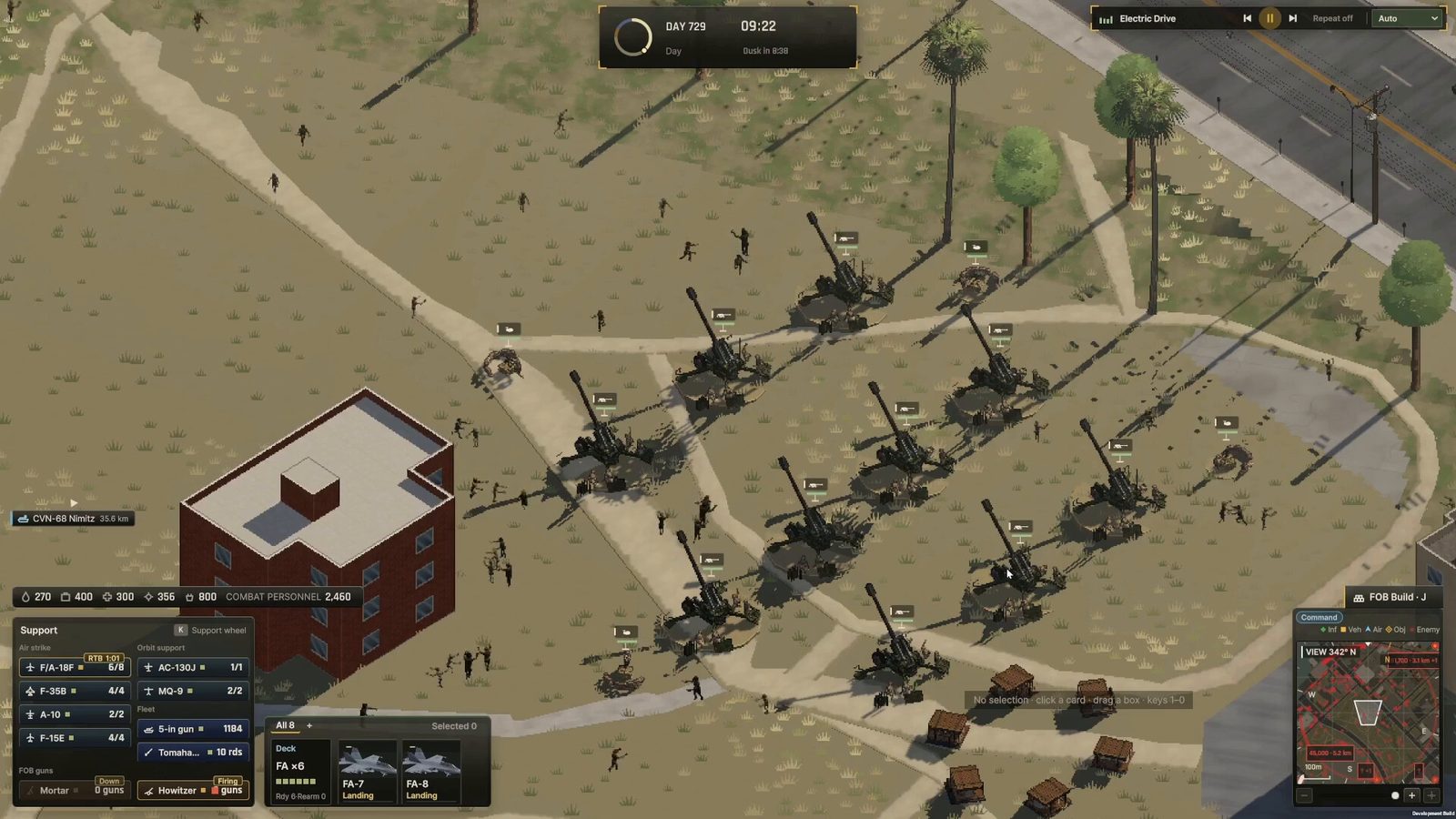
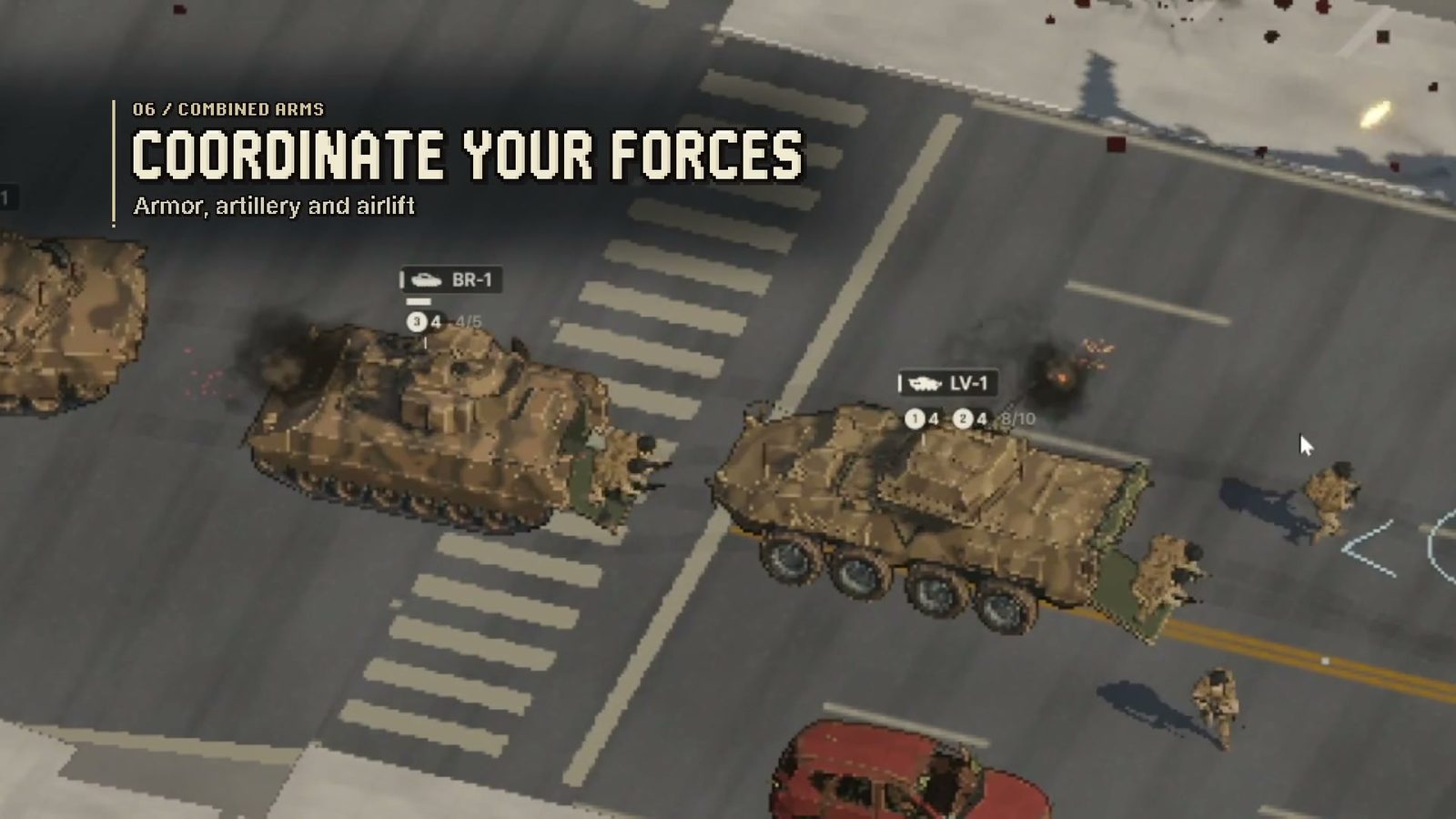
The battlefield is where you pay for the map. Scroll into any street and it becomes a 3D pixel-art battlefield with no loading screen; scroll back out and the fight keeps running. Every soldier lost, zombie killed and building destroyed carries back to the operations view. Press TAB and you take direct control of a soldier, tank or helicopter — the fastest way to save something that is about to die, and the fastest way to stop watching the other districts.
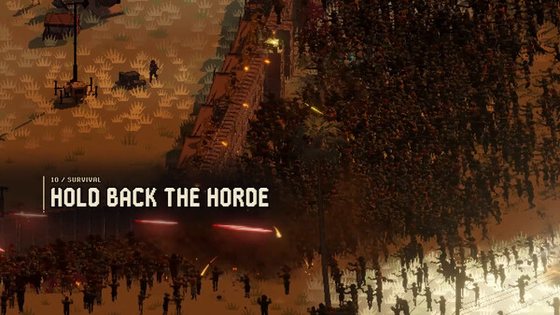
Then there is the thing on the other side. The horde is run by a hive mind called the Nexus, and it plays the map rather than the battle: it ambushes convoys, cuts roads, besieges bases and hunts units that get stranded. You always get a warning before an attack lands. The warning is the game handing you a decision — reroute, retreat, or spend fire support on the approach.
Before you deploy: six things worth knowing
- You cannot hold all 15 districts. The design says it outright. Every hour you spend trying is an hour you spend not evacuating.
- Armour and aircraft only work near a base you hold. Soldiers, vehicles and aircraft burn ammunition and fuel, and they can only rearm and refuel at your bases. A push with no base behind it is a countdown.
- Gates break more bases than zombies do. The FOB builder warns you about walled areas with no entrance, and about vehicle gates that are too narrow. Build the gate first.
- Fire support is a magazine, not a menu. Ship magazines are finite and do not refill at sea. Heavy weapons also bring buildings down — including the cover your infantry is using.
- Your dead change sides. Soldiers killed by the horde rise again as zombies, so a bad fight compounds.
- The port is the exit, not a prize. Everything you get to the Port of LA travels with you into the world campaign. Losing the southern corridor costs you the next act, not just one district.
Quick answers
| Question | Short answer |
|---|---|
| What genre is it? | Action / Indie / Strategy — a single-player real-time survival RTS with base building and direct control. |
| When is it out? | No release date. Steam lists it as Coming soon. |
| What does it cost? | No price published. |
| Is there co-op? | No. Steam files it as Single-player. |
| Which platforms? | Windows and macOS. No Linux. |
| How big is one act? | Los Angeles is 15 districts, followed by a world map campaign. |
Where to read next
- Gameplay overview — the two layers, the district states, and how a session actually runs.
- Los Angeles map — the 15 districts, the fog of war problem, and an evacuation order that works.
- Units and vehicles — who you can order, what armour is for, and when to press TAB.
- Fire support — nine call-in systems, one finite magazine, and buildings as cover you might delete.
- Base building and supply — the FOB build order and why convoys are what actually lose campaigns.
- World campaign — what the Port of LA evacuation buys you, and how the map turns global.